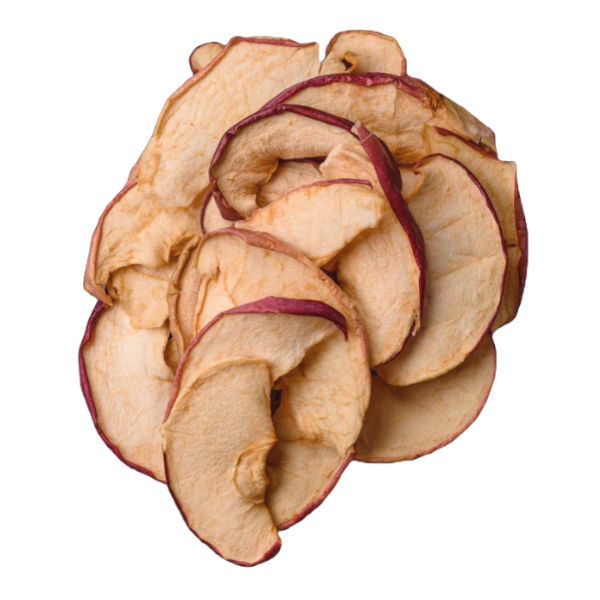
Dried apples are a popular form of preserved fruit made by removing the water content from fresh apples, resulting in a sweet, chewy snack. One of the key properties of dried apples is the concentration of their natural sugars, making them sweeter and more flavorful than fresh apples. This enhanced sweetness makes dried apples a convenient and delicious option for snacking. However, the drying process also concentrates the calories and sugars, so they should be eaten in moderation, especially for those who are watching their sugar or calorie intake.
Nutritionally, dried apples retain many of the essential vitamins and minerals found in fresh apples, though in a more concentrated form. They are particularly rich in dietary fiber, which supports digestive health by aiding in regular bowel movements and promoting gut health. Dried apples also contain vitamins such as vitamin C, which plays a role in supporting the immune system and maintaining skin health, and small amounts of potassium, which is essential for maintaining healthy blood pressure and proper muscle function. However, some vitamin content, like vitamin C, may be reduced during the drying process, depending on how the apples are dehydrated.
Dried apples are incredibly versatile and can be used in a variety of culinary applications. They can be eaten on their own as a portable snack, or incorporated into trail mixes, granola, or baked goods like muffins, cakes, and cookies. Their natural sweetness makes them an excellent ingredient for both sweet and savory dishes. Dried apples can also be rehydrated and used in cooking, adding texture and flavor to stews, sauces, and desserts. Their long shelf life makes dried apples a convenient option for enjoying the taste and nutritional benefits of apples year-round, even when fresh apples are not in season.